
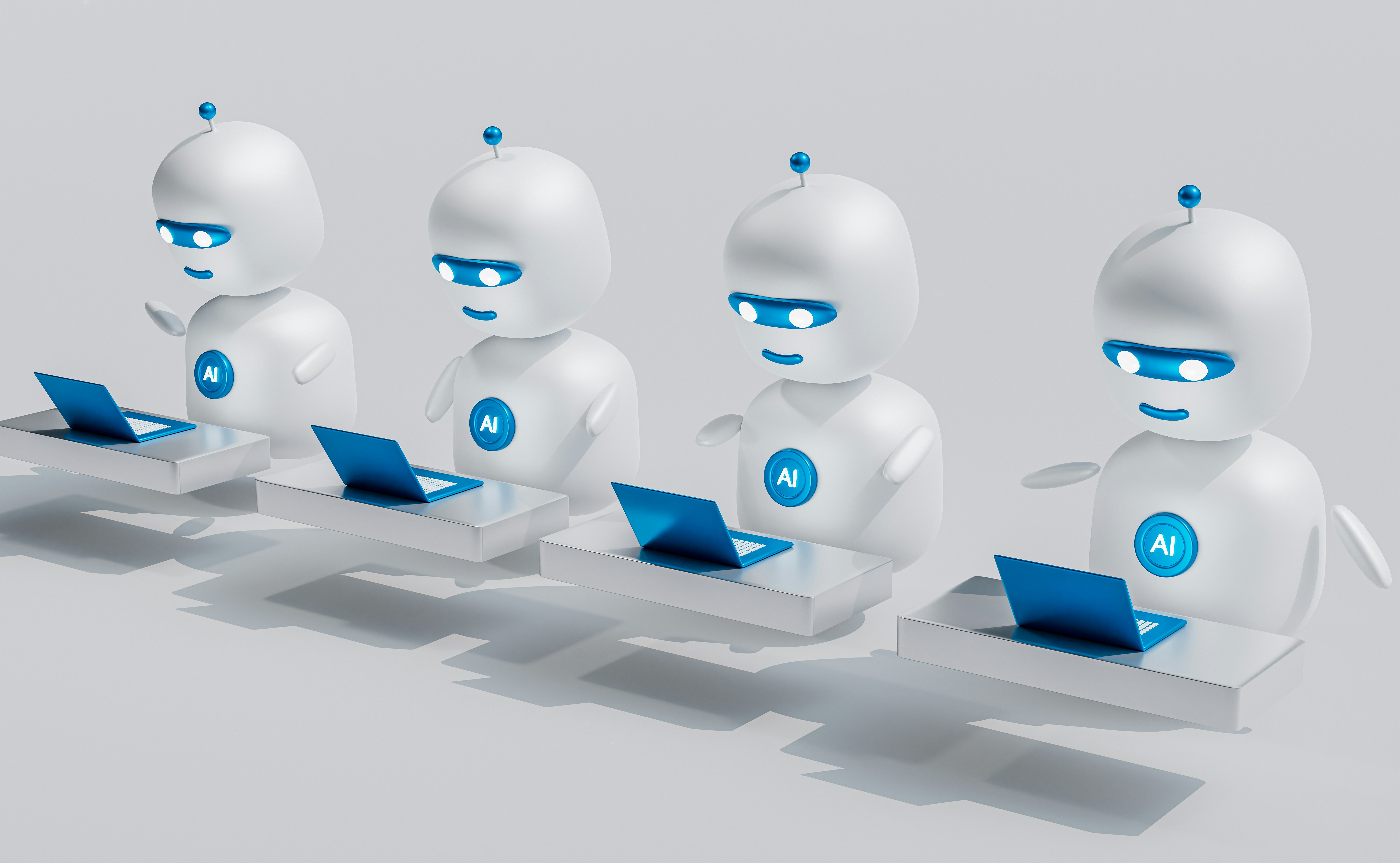
Introduction to AI and Its Impact on Employment
Artificial Intelligence (AI) has emerged as a transformative force within various industries, fundamentally altering how businesses operate and, consequently, reshaping the workforce landscape. As AI technology continues to advance at an unprecedented pace, its integration into the workplace has become increasingly common. This evolution raises significant concerns regarding its potential impact on employment, particularly in terms of job displacement and the obsolescence of certain human tasks.
Numerous sectors, including manufacturing, finance, healthcare, and customer service, have begun to implement AI tools that automate repetitive tasks and enhance efficiency. As a result, employees in these fields may face challenges as their roles evolve or become redundant. For instance, AI-driven software can process large volumes of data faster than a human can, which thereby improves decision-making processes but also threatens traditional data processing jobs. According to reports, the adoption of AI tools could lead to a significant reduction in jobs that involve routine tasks, thereby prompting a reevaluation of workforce skills.
Moreover, AI is not just a means to replace human labor; it also represents a shift towards enhanced collaboration between humans and machines. Many organizations are now leveraging AI technologies to augment their employees’ capabilities, enabling them to focus on higher-level functions that require critical thinking and creativity. This hybrid approach highlights the need for a workforce that is adaptable and equipped with new skills relevant to these emerging technologies.
As we delve deeper into the implications of this phenomenon, it is essential to identify specific AI tools that could potentially lead to significant disruptions in employment patterns. Understanding these advancements will provide valuable insight into the future of work and the evolving relationship between humans and intelligent systems.
AI Tool #1: Automation Software
Automation software, particularly Robotic Process Automation (RPA), represents a significant advancement in technology aimed at enhancing efficiency within various industries. This category of AI tools is designed to automate repetitive and mundane tasks that typically require human intervention. By leveraging this technology, organizations can achieve higher accuracy and speed in task execution, which ultimately leads to increased productivity.
One of the primary applications of automation software is in data entry and processing, where it can replicate routine activities with precision that often surpasses human capabilities. For example, industries such as finance and accounting utilize RPA to automate tasks like invoice processing and compliance checks, drastically reducing the time and resources previously needed for these activities. This not only streamlines operations but also minimizes the potential for human error.
Moreover, automation software is increasingly being adopted across sectors including healthcare, logistics, and customer service. In healthcare, for instance, AI tools manage patient data and streamline administrative tasks, allowing professionals to focus more on patient care rather than paperwork. In customer service, chatbots powered by automation software are available 24/7 to handle common inquiries, significantly reducing the need for human representatives to address every customer interaction.
As organizations continue to integrate automation software into their workflows, the implications for the workforce are becoming evident. The efficiency and reliability of these AI-driven tools suggest a shift towards fewer human resources being required for routine processes, leading to discussions about the future of work. Ultimately, the rise of automation software exemplifies how AI tools can indeed make humans obsolete in performing various tasks across multiple industries, heralding a new era of operational capability.
AI Tool #2: Natural Language Processing (NLP) Applications
Natural Language Processing (NLP) is a cutting-edge segment of artificial intelligence that empowers machines to comprehend and interact using human language. This technology has dramatically evolved, enabling computers to perform tasks that were once considered solely within the human domain. NLP applications are increasingly prevalent in customer service environments, where chatbots have become a routine choice for businesses seeking to enhance user engagement while minimizing operational costs.
Chatbots, powered by NLP, provide immediate responses to customer inquiries, significantly reducing the need for human operators. These AI-driven interfaces can handle multiple inquiries simultaneously, ensuring 24/7 availability and thereby presenting a conceivably more efficient alternative to traditional human agents. They are programmed to understand various dialects, idioms, and contexts, enabling them to offer personalized assistance to users. For instance, notable implementations of chatbots include platforms like Drift and Intercom, which assist businesses in managing customer interactions with minimal human oversight.
In addition to chatbots, NLP is instrumental in virtual assistants such as Amazon’s Alexa and Apple’s Siri. These AI tools can execute commands, retrieve information, and facilitate human-like conversations, showcasing a commendable level of understanding and responsiveness. As the sophistication and accuracy of these applications increase, they gradually replace roles traditionally held by human operators in various sectors, including customer support and content generation.
Consequently, the rise of NLP applications poses significant questions regarding the future role of humans in these fields. As organizations increasingly adopt these AI tools, the potential for job displacement becomes a pertinent topic worth considering. Understanding the implications of NLP technology will be crucial as it continues to advance and redefine the landscape of human labor.
Machine Learning for Predictive Analytics
Machine learning has emerged as a pivotal technology in the realm of predictive analytics, functioning as a sophisticated tool designed to analyze vast datasets and identify patterns that may not be immediately recognizable to human analysts. Organizations are increasingly leveraging these advanced algorithms to forecast future trends, consumer behavior, and operational risks. By harnessing the power of machine learning, businesses can make informed decisions that lead to more effective strategies and improved resource allocation, thereby enhancing overall operational efficiency.
In the context of predictive analytics, machine learning tools digest historical data to produce insights that can help companies anticipate outcomes with remarkable precision. For instance, retail businesses utilize these tools to assess purchasing patterns and optimize inventory, while financial institutions deploy predictive analytics for risk assessment and fraud detection. As these tools develop further, they are poised to replace more traditional roles, such as data analysts and strategy professionals, who previously performed similar tasks manually.
Moreover, the significance of machine learning in predictive analytics extends to various sectors, including healthcare, manufacturing, and marketing. In the healthcare sector, machine learning algorithms analyze patient data to predict potential health issues before they arise, thus facilitating proactive measures. In manufacturing, predictive maintenance powered by machine learning helps companies prevent equipment failures by analyzing performance data in real-time, ultimately reducing downtime and costs.
As machine learning continues to evolve and incorporate increasingly sophisticated methodologies, organizations may find that reliance on human input diminishes. The growing capabilities of these ai tools reinforce the notion that roles traditionally held by humans may become obsolete, as predictive analytics driven by machine learning becomes the norm across various industries.
AI Tool #4: Image Recognition Technology
In recent years, advancements in image recognition technology have significantly transformed various industries, such as security, retail, and healthcare. These AI tools utilize complex algorithms to identify and classify visual data with a level of accuracy and efficiency far superior to that of humans. As a result, the capabilities of machine learning and computer vision in this domain have raised concerns about the potential obsolescence of roles traditionally performed by humans.
In the security sector, for example, image recognition technology is employed in surveillance systems to monitor premises and detect unauthorized access. These systems analyze live video feeds in real-time, identifying suspicious activities with minimal human intervention. Consequently, the need for human monitors has dramatically decreased, as AI systems can continuously scan numerous video streams at once, often achieving higher accuracy rates in distinguishing between normal behavior and potential threats.
Similarly, in retail, image recognition technology is used to analyze customer behavior and preferences. With applications in automated checkout systems, these tools enable stores to identify products that customers select, allowing for a streamlined shopping experience free from traditional cashiers. This level of efficiency not only enhances customer satisfaction but also reduces the requirement for staff, leading to fewer job opportunities in the retail sector.
Healthcare is another industry benefiting from image recognition advancements, particularly in diagnostics. AI systems are capable of analyzing medical images, such as MRIs and X-rays, to identify anomalies that may require further investigation. Studies have shown that these tools can achieve results comparable to those of experienced radiologists, thereby suggesting a potential shift in the roles within medical imaging and diagnostic professions.
Ultimately, as image recognition technology continues to evolve, its implications for the workforce remain significant. The potential for these AI tools to make humans obsolete in various job functions warrants important discussions about the future of work and the nature of human-machine collaboration in increasingly automated environments.
AI Tool #5: AI-Driven Content Creation
In recent years, AI-driven content creation tools have emerged as powerful solutions for businesses and individuals seeking to generate written material quickly and efficiently. These tools utilize natural language processing and machine learning algorithms to produce text that can range from simple social media posts to complex articles and reports. By analyzing vast amounts of data, these AI systems can mimic human writing styles and create content that is often indistinguishable from that written by a professional. This capability poses significant challenges to traditional content creators, such as writers and marketers, as it threatens to make their roles less relevant.
One of the primary advantages of AI-generated content is its speed and scalability. Businesses can produce a high volume of content in a fraction of the time it would normally take a human writer, without sacrificing quality in many cases. For instance, platforms like GPT-3 and other similar technologies allow users to input prompts or topics, and the AI responds with coherent and contextually relevant text. This efficiency invites companies to rely more on AI to meet their content demands, potentially displacing writers who traditionally fulfill these roles.
However, despite the benefits, AI-driven content creation tools also face limitations. They may struggle with nuance, creativity, and deep understanding of complex topics. While these tools can generate factual content, they may miss the emotional depth and unique voice that human writers bring to their work. Moreover, as AI continues to evolve, ethical considerations arise regarding originality and intellectual property, leading to ongoing debates about the implications of utilizing such technology. Content marketers must adapt to this new landscape by enhancing their skills and embracing the potential of AI, ensuring that they remain relevant in an increasingly automated world.
AI Tool #6: Customer Relationship Management (CRM) Tools with AI
In the rapidly evolving landscape of business, Customer Relationship Management (CRM) tools equipped with artificial intelligence (AI) are taking center stage. These advanced platforms are revolutionizing the way organizations manage customer interactions and enhance their services. The integration of AI into CRM systems enables predictive analytics and automates various facets of customer engagement, ultimately streamlining operations.
AI-driven CRM tools leverage vast amounts of customer data to forecast customer behavior and preferences. By analyzing historical data, these systems can predict potential issues, allowing businesses to take proactive measures instead of reactive ones. For instance, AI analytics can identify patterns indicating customer dissatisfaction, enabling companies to address problems before they escalate into lost sales or decreased customer loyalty.
Furthermore, CRM tools integrated with AI facilitate automated follow-up processes. This automation ensures that customer inquiries and feedback are addressed in a timely manner, significantly enhancing the customer experience. Automated responses, personalized recommendations, and targeted marketing campaigns can be triggered based on a customer’s past interactions, offering a more tailored approach that can lead to increased sales.
The role of marketing and sales personnel is also transforming with the advent of AI-enhanced CRM tools. By automating repetitive tasks such as data entry and lead scoring, these professionals can focus their efforts on building relationships and closing deals. The shift from manual to automated processes not only increases efficiency but also helps businesses reduce operational costs, showcasing how AI tools are reshaping traditional roles within an organization.
As CRM systems continue to evolve with AI, businesses that embrace these tools are likely to gain a competitive edge in understanding and meeting customer needs, highlighting how 18 AI tools that will make humans obsolete are increasingly becoming integral to business success.
AI Tool #7: Autonomous Vehicles
The development of autonomous vehicles represents a significant advancement in artificial intelligence technology, promising to revolutionize the transportation industry. These vehicles, equipped with sophisticated AI systems, can navigate and operate without the need for human intervention, thereby restructuring traditional driving roles. Major automobile manufacturers and tech companies are racing to perfect this technology, leading to a future where self-driving cars, trucks, and buses may become commonplace on our roads.
The potential of autonomous vehicles extends beyond mere convenience; they have the capability to enhance safety and efficiency in transportation. With the integration of AI, these vehicles can process vast amounts of data from their surroundings, allowing them to make informed decisions that could significantly reduce accidents caused by human error. As traffic patterns evolve, autonomous systems promise improved traffic flow and reduced congestion, leading to a more streamlined transportation framework.
However, the rise of autonomous vehicles raises substantial concerns regarding job displacement. Professions such as truck driving, taxi services, and delivery services are likely to face challenges as machines replace human drivers. According to various studies, millions of driving jobs in the United States alone are at risk of becoming obsolete. The implications of this shift are profound, requiring policymakers and communities to consider solutions for those affected by these changes.
As we move forward, the debate surrounding autonomous vehicles will intensify. While they offer the promise of increased efficiency and safety, the economic ramifications cannot be overlooked. It is essential to acknowledge that as AI tools like autonomous vehicles make certain jobs redundant, society must also find ways to adapt and address these impending transformations in the workforce.
Conclusion: Embracing Change and Reskilling for the Future
The rapid advancement of artificial intelligence is reshaping industries and professions at a remarkable pace. As discussed in this blog post, the introduction of 18 AI tools that will make humans obsolete signifies a pivotal moment in the evolution of work. These tools are not merely instruments designed to enhance productivity; they also herald a future where traditional job roles may drastically change or even disappear. The impact of AI on the job market necessitates a proactive approach from both individuals and organizations.
To navigate this transformative landscape, it is crucial for the workforce to prioritize reskilling and continuous learning. The need to adapt to advancements in technology should inspire individuals to pursue education in emerging fields that complement AI capabilities. Learning new skills and acquiring knowledge in areas where human capability can flourish alongside AI will be essential. Notably, disciplines that emphasize creativity, emotional intelligence, and complex problem-solving will remain invaluable, even as automation takes center stage.
Organizations also bear the responsibility of fostering a culture that embraces change. By investing in employee training and development programs, companies can ensure their workforce is equipped to thrive in a technologically driven environment. Additionally, workforce planning must involve anticipating future skill requirements and encouraging innovation that leverages both human and AI strengths.
In conclusion, the advent of these groundbreaking AI tools presents both challenges and opportunities. While there are legitimate concerns surrounding job displacement and obsolescence, they also afford the potential for higher productivity and new job creation. Embracing change and committing to lifelong learning will empower individuals to navigate this future landscape effectively. By doing so, society can mitigate the risks associated with a shift towards automation and participate fully in a future enriched by artificial intelligence.

لا يوجد تعليق