
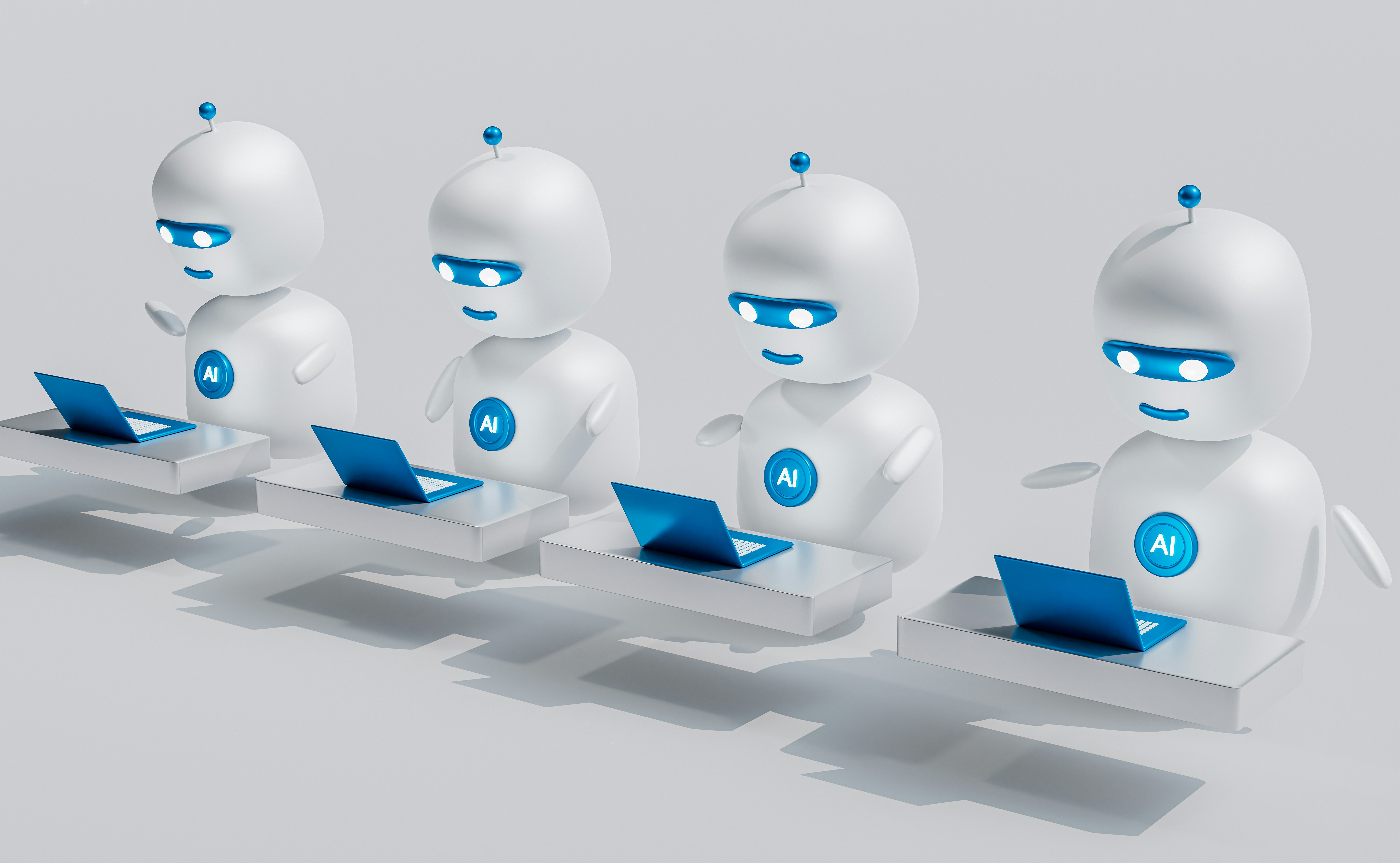
Introduction to AI in the Workplace
Artificial Intelligence (AI) has significantly evolved over the past few decades, transitioning from theoretical concepts into practical applications that are now integrated into various sectors. The rapid advancements in technology have made AI tools more accessible and efficient, leading to their increasing adoption in workplaces around the globe. This shift represents a paradigm change in the capabilities of organizations, where automation and intelligent systems can enhance productivity and accuracy.
The trend of AI replacing traditional jobs has stirred both excitement and concern among employees and employers alike. On one hand, AI enhances operational efficiency, reduces costs, and improves customer experiences by handling repetitive tasks and processing vast amounts of data quickly. Industries such as manufacturing, finance, healthcare, and retail are leveraging AI technologies to streamline operations and focus human efforts on more strategic initiatives.
However, the growing reliance on AI tools also presents challenges that cannot be overlooked. One of the primary concerns is the impact on employment. Many roles previously held by human workers are becoming increasingly automated, leading to job displacement and a shift in the workforce landscape. This has raised questions about retraining existing employees and creating new job opportunities in an evolving market that demands different skill sets.
In essence, the integration of AI in the workplace provides numerous advantages, yet it necessitates a balance between technology and the human element. As industries adapt to these changes, it will be crucial to address the implications of AI on employment while fostering an environment that encourages innovation and job creation. The conversation surrounding AI and its role in the workforce is ongoing, as both providers and users of technology navigate this complex new reality.
Understanding the Impact of AI on Employment
The advent of artificial intelligence (AI) is reshaping various industries, leading to profound changes in the employment landscape. Recent studies indicate that while AI technology is streamlining processes and increasing efficiency, it has also resulted in significant job displacement across many sectors. A report by the World Economic Forum suggests that by 2025, 85 million jobs may be displaced by a shift in labor division between humans and machines.
However, it is essential to recognize that AI’s impact on employment is not solely negative. The same report forecasts the creation of 97 million new roles that will emerge as a consequence of AI advancements. These new jobs will likely require different skill sets focused on managing, developing, and maintaining AI systems, illustrating a shift in workplace requirements rather than an outright loss of jobs.
Industries such as manufacturing, retail, and logistics have already witnessed how AI tools, like robotics and automated systems, can reduce the need for traditional labor. In parallel, sectors that are more aligned with technology, such as data analysis and IT, are experiencing job growth as organizations seek skilled employees who can navigate advancements in AI.
As AI continues to penetrate various fields, the inevitability of job transformation is apparent. Workers may find themselves needing to adapt to new technologies, requiring upskilling and reskilling initiatives to remain employable. The emphasis is on fostering a workforce that can work alongside AI rather than being replaced by it. As organizations invest in AI technologies, it becomes imperative for employees to embrace lifelong learning and adaptability to thrive in this evolving job environment.
In conclusion, while AI does pose challenges to existing employment structures, it also presents opportunities for innovation and growth in new job roles. The future of work will likely require a balance between human capabilities and machine efficiencies, prompting a reevaluation of workforce strategies across industries.
AI Tools Revolutionizing Different Industries
The integration of Artificial Intelligence (AI) tools across various sectors is transforming the way businesses operate and deliver value. Industries such as healthcare, finance, and manufacturing are experiencing significant changes as AI systems emerge to enhance efficiency and optimize processes.
In the healthcare sector, AI tools are being utilized to streamline patient care and diagnostics. Machine learning algorithms analyze vast amounts of medical data to identify patterns and potential health risks, enabling early intervention and improved treatment outcomes. Furthermore, AI-powered chatbots are assisting with patient inquiries, reducing the burden on medical staff and allowing healthcare professionals to focus on more complex tasks.
Within the finance industry, AI tools are reshaping how financial institutions operate. Automated trading systems utilize AI algorithms to analyze market trends and execute trades at unprecedented speeds, thereby reducing human error and increasing profitability. Additionally, AI is playing a crucial role in risk assessment, as it helps banks and investment firms to better identify potential lending risks based on comprehensive data analysis.
The manufacturing sector is also witnessing a notable shift due to AI advancements. Smart factories equipped with AI tools are enhancing productivity by predicting equipment failures and optimizing supply chain logistics. By implementing predictive maintenance strategies, manufacturers can minimize downtime and reduce maintenance costs. Robotics, powered by AI, are taking over repetitive tasks and ensuring higher precision in production lines, resulting in increased efficiency.
Moreover, AI tools are transforming the retail sector, where personalized shopping experiences are created through data analytics and machine learning. This level of personalization increases customer satisfaction and drives sales while enabling retailers to optimize inventory management based on consumer behavior.
In conclusion, the adoption of AI tools across multiple industries is not merely enhancing operational efficiency but is revolutionizing workflows and replacing traditional roles, thus paving the way for a future driven by intelligent systems.
Top 20 AI Tools Replacing Workers
As the digital landscape continues to evolve, a variety of artificial intelligence tools are emerging, profoundly impacting various industries. Here we present a list of 20 powerful AI tools that are being integrated into workplaces, potentially replacing traditional roles.
1. ChatGPT: Primarily used in customer service and support, ChatGPT can handle inquiries and provide guidance, reducing the need for human customer service representatives.
2. TensorFlow: This open-source machine learning framework is used for deep learning applications, often replacing roles in data analysis and predictive modeling.
3. IBM Watson: Known for its capabilities in natural language processing, Watson aids in data analysis and healthcare diagnostics, impacting roles in medical research and support.
4. UiPath: An RPA (Robotic Process Automation) tool that automates routine tasks, UiPath is widely used in finance and HR, reducing the demand for administrative positions.
5. Salesforce Einstein: Utilizing AI to enhance CRM capabilities, it targets marketing and sales roles by automating lead scoring and customer insights.
6. Microsoft Azure AI: This cloud-based platform aids in machine learning and AI applications, influencing jobs in IT and software development.
7. Tableau: With integrated AI features, Tableau transforms data visualization tasks, impacting data analyst roles.
8. Zoho: Employing AI in its suite of tools for marketing and CRM, Zoho reduces the need for human oversight in these areas.
9. DeepMind: This AI research lab specializes in neural networks, affecting jobs in research and algorithm development.
10. Jasper AI: Content generation has been revolutionized with Jasper, affecting roles in copywriting and content creation.
11. Grammarly: By offering advanced writing assistance, Grammarly impacts roles in editing and proofreading.
12. Hootsuite: Incorporating AI into social media management, Hootsuite decreases the necessity for community managers.
13. Amazon Alexa for Business: In corporate environments, it automates scheduling and administrative tasks, making several administrative roles less relevant.
14. DataRobot: This automated machine learning tool expedites data science processes, impacting data scientist positions.
15. Clearbit: Enhancing lead generation with AI, Clearbit can replace roles in lead research and collection.
16. Slackbot: Integrated into team collaboration platforms, it automates responses and functions, diminishing the need for specific coordination roles.
17. Writer.com: This AI-powered writing assistant simplifies content creation, leading to potential job reductions in content writing fields.
18. Algorithmia: Facilitating machine learning model deployment, this tool affects positions in software engineering.
19. Notion AI: This productivity software enhances task management and documentation, reducing administrative workload.
20. Zendesk: PSupporting customer service automation through AI, it decreases the necessity for customer support agents.
With these powerful AI tools transforming how industries operate, the future of work is evolving rapidly, prompting organizations to reconsider their workforce strategies.
Case Studies: AI Tools in Action
As we navigate through the landscape of artificial intelligence tools implemented across various industries, it is essential to analyze real-world case studies demonstrating both the efficacy and limitations of these technologies. One notable example is the integration of AI-driven customer service chatbots at a leading online retail company. By utilizing natural language processing (NLP), the business was able to improve response times for customer inquiries by up to 75%. However, this implementation posed challenges, as some staff expressed concerns regarding job security and the need for retraining to work alongside AI systems.
Another compelling case is the deployment of AI-powered predictive maintenance systems within a major manufacturing firm. By analyzing machine data, the AI tools have enabled the company to predict equipment failures with remarkable accuracy, thereby reducing downtime and maintenance costs significantly. Nonetheless, the workforce needed to adapt to new operational protocols, leading to initial resistance among employees who were accustomed to traditional maintenance practices.
In the healthcare sector, an AI-assisted diagnostic tool was introduced in a hospital, improving the accuracy of disease detection in medical images. This advancement not only enhanced patient outcomes but also raised discussions among medical personnel about the evolving role of AI in diagnostics. While many healthcare professionals embraced this technology as a powerful assistant, others worried about the potential reduction in roles traditionally held by radiologists.
These case studies underscore the transformative impact of AI tools on various sectors. Although the benefits, such as enhanced efficiency and reduced operational costs, are evident, they also highlight significant challenges related to workforce adaptability and the need for ongoing training. Moving forward, organizations must find a balance between leveraging AI technologies and addressing the concerns of their employees, ensuring a cohesive transition that benefits both parties.
Who Is Affected? Job Roles at Risk
The rise of artificial intelligence (AI) tools is significantly transforming the employment landscape across various sectors. Job roles that exhibit repetitive tasks or involve predictable patterns are particularly vulnerable to being automated. The front lines of these changes can be observed in areas such as manufacturing, data entry, and customer service. For example, assembly line personnel are facing the threat of robots that can perform their tasks with greater efficiency and consistency.
Furthermore, administrative positions that require routine data processing such as scheduling appointments or managing records are also at risk. AI’s capability to handle vast amounts of information rapidly makes it a formidable competitor in fields that rely on clerical duties. Workers in these roles may find themselves displaced by AI systems designed to streamline operations and reduce costs.
Additionally, roles in the transportation sector, such as truck drivers and delivery personnel, are susceptible due to advancements in autonomous vehicles. As companies invest in self-driving technology, the demand for human drivers may diminish, prompting a reevaluation of skills required in the industry. Those individuals who do not adapt to technological changes may see a direct impact on their employment prospects.
In contrast to these affected roles, workers equipped with skills in technology management, software development, and complex problem-solving will remain invaluable. The emergence of AI has created a demand for individuals who can create, manage, and collaborate with these advanced systems. Professionals who continuously upgrade their skills and embody adaptability are likely to remain competitive in a job market increasingly influenced by AI technologies.
The Role of Upskilling and Reskilling
As artificial intelligence continues to reshape the workforce, upskilling and reskilling have emerged as essential strategies for workers seeking to remain competitive in an evolving job landscape. The integration of AI tools in various sectors has altered job requirements significantly, necessitating that employees adapt by developing new competencies. Workers who proactively engage in learning can enhance their current skill sets (upskilling) or acquire entirely new ones (reskilling) to ensure their ongoing relevance and productivity.
Upskilling involves training employees to improve their existing knowledge and abilities. This often focuses on enhancing specific skills that align with technological advancements, such as data analysis, coding, or digital marketing. Organizations are increasingly recognizing the value of investing in the professional growth of their workforce. Many firms are now offering specialized training programs, workshops, and online courses that target emerging technological trends, providing employees with the tools necessary to thrive in an AI-integrated environment.
Reskilling, on the other hand, encompasses a broader approach when workers transition into entirely different roles. This may be necessary as certain jobs become obsolete due to automation, while new positions arise that demand a different set of skills. Flexible learning pathways, including MOOCs (Massive Open Online Courses), boot camps, and vocational training, are vital for those pursuing reskilling opportunities. These platforms allow individuals to learn at their own pace and acquire relevant qualifications that can lead to new career paths.
Ultimately, the role of upskilling and reskilling is crucial in countering potential job displacement caused by AI technologies. By embracing continuous learning and adapting their skill sets, workers can navigate the complexities of the modern workforce and stand in good stead amidst the rapid changes brought about by automation and artificial intelligence.
Future Predictions: The Next Decade of Work
The integration of artificial intelligence (AI) into various sectors foreshadows significant changes in the workplace within the next decade. As AI technologies continue to evolve and become more sophisticated, we can anticipate not only the transformation of existing jobs but also the emergence of entirely new job categories. One of the most notable trends will be the development of roles that focus on the management, oversight, and ethical use of AI systems. As organizations increasingly rely on AI tools for operational efficiency, workers who can bridge the gap between technology and human resources will be in high demand.
Furthermore, traditional roles may evolve rather than vanish altogether. Positions that require cognitive tasks, such as data analysis and decision-making, may see human workers collaborating with AI-driven tools. This collaboration could foster a hybrid work model, wherein employees harness AI’s capabilities for increased productivity while retaining essential human skills, such as creativity and emotional intelligence. Consequently, it is plausible that education and training programs will pivot to focus on preparing the workforce for this collaborative work environment, emphasizing STEM skills alongside interpersonal collaboration.
Moreover, industries such as healthcare, manufacturing, and customer service will likely undergo profound transformations. For instance, healthcare professionals may increasingly depend on AI diagnostics to enhance patient care, allowing them to focus on more complex, human-centered interactions. Similarly, in manufacturing, automation and AI could streamline production processes, but the need for a skilled workforce to oversee and maintain these technologies will remain crucial. This trend will necessitate a reevaluation of skill development strategies, ensuring that workers are equipped with the knowledge to navigate the AI-enhanced landscape.
In conclusion, the next decade promises to be a transformative period for the workplace as AI continues to shape roles and industries. Recognizing and adapting to these potential changes will allow workers to thrive in the evolving job market, leading to innovative opportunities that were previously unimaginable.
Conclusion: Embracing Change in the Workforce
The advent of artificial intelligence (AI) tools is undeniably transforming various sectors of the workforce. As outlined throughout this discussion, these tools are not simply replacing traditional jobs, but rather redefining them. The integration of AI into the workplace presents both challenges and opportunities that demand a proactive response from the workforce.
The key takeaway is the importance of adaptability in the face of rapid technological advancements. Workers must recognize that the landscape of employment is evolving, and the skills that were once deemed essential may require reevaluation. In this context, the ability to learn new skills and embrace change is paramount for career longevity.
In lieu of fearing obsolescence, individuals are encouraged to view AI as an adjunct to human capabilities. Collaborative efforts between AI systems and human workers can enhance productivity and create new roles that focus on uniquely human skills—such as creativity, empathy, and critical thinking. This shift in mindset can facilitate a smoother transition into a future where AI tools are commonly utilized.
A hopeful perspective on the future of work reinforces the idea that technological advancements should not serve as a threat but rather an opportunity for growth. By embracing change and the innovations that AI brings, workers can equip themselves to thrive in this new era. The workforce should consider ongoing education and skills development as essential components of their professional journey, which will ultimately allow them to coexist harmoniously with AI advancements.

لا يوجد تعليق