
Understanding AI Bots
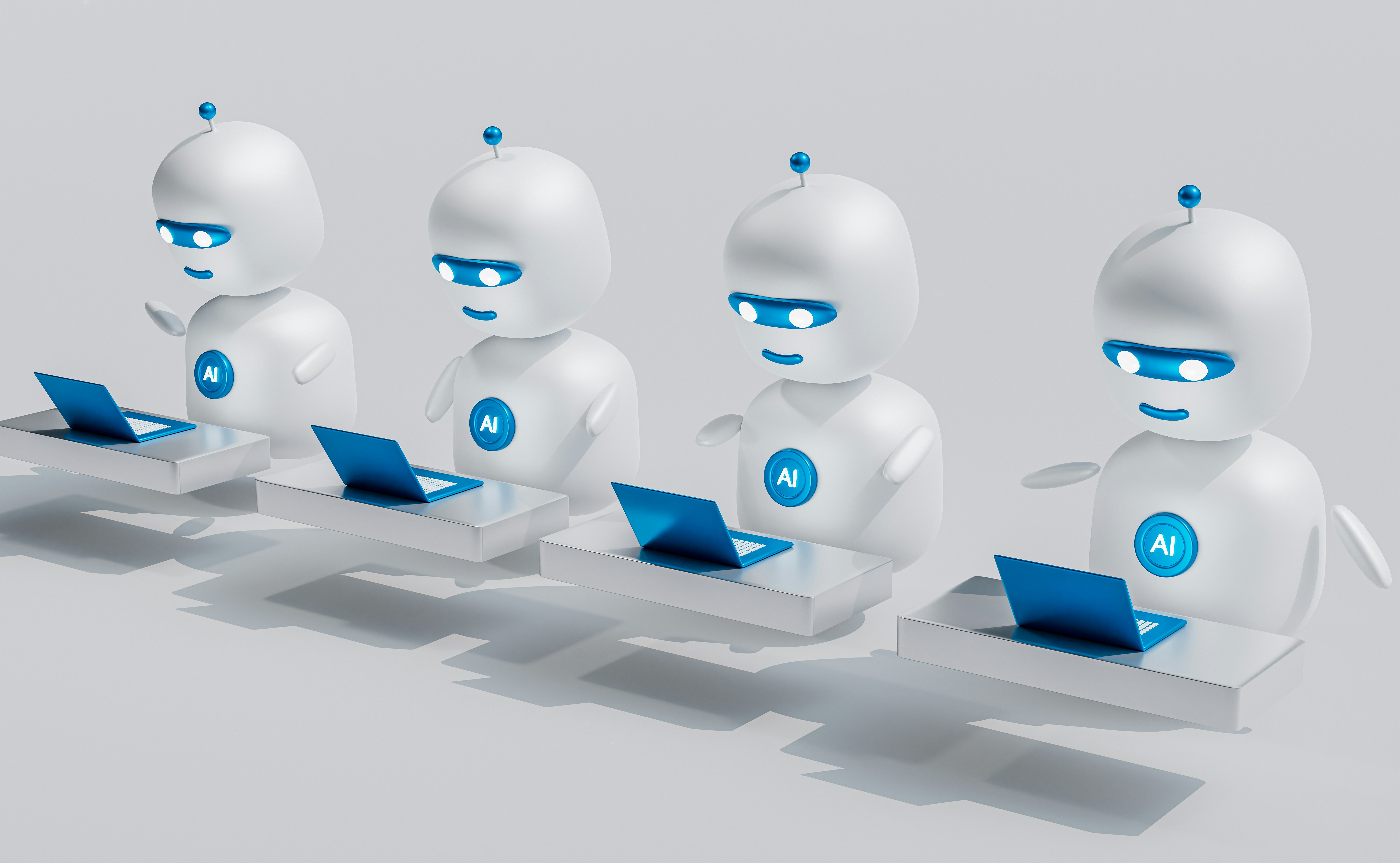
AI bots are sophisticated software applications that utilize artificial intelligence technologies to simulate human-like interactions. Unlike traditional software, which relies primarily on pre-programmed algorithms and rules, AI bots are designed to learn from user interactions and adapt over time. This enables them to perform tasks autonomously, making them incredibly versatile tools for both individuals and businesses.
There are various types of AI bots, each tailored for specific tasks. Some common categories include chatbots, which engage in conversations with users; virtual assistants, designed to manage schedules and information; and service bots that streamline customer support processes. These bots employ natural language processing (NLP) and machine learning algorithms to interpret user input, allowing them to provide relevant responses or execute commands effectively.
The applications of AI bots span numerous industries, transforming the way businesses operate. For example, in e-commerce, chatbots can enhance customer service by providing instant answers to inquiries, thereby improving user satisfaction. In healthcare, AI bots can assist in patient management by automating appointment scheduling and providing information about treatments and medications. Furthermore, incorporating AI bots into business processes can lead to significant cost savings by automating repetitive tasks and freeing up human resources for more complex activities.
The potential benefits of integrating AI bots into business operations are tremendous. By creating custom AI bots tailored for specific tasks or businesses, organizations can enhance efficiency, streamline processes, and improve customer engagement. Custom bots not only meet the unique demands of a given business but also provide a competitive edge by harnessing the latest AI technologies to adapt to market changes swiftly.
Identifying Your Business Needs
Understanding the specific tasks or problems within a business that can benefit from the implementation of AI bots is a crucial step in the process of automation. Organizations need to carry out a detailed needs analysis to effectively pinpoint areas of inefficiency or opportunities where AI could enhance productivity. This initial assessment serves as the foundation for creating a tailored AI bot that addresses the unique challenges a business faces.
First, consider conducting interviews or surveys with employees across different departments to gather insights about their daily tasks and identify pain points. Often, staff will have valuable input regarding repetitive tasks that consume their time and could be automated. For instance, if customer service representatives frequently spend time answering common queries, designing a chatbot to handle these inquiries could significantly alleviate their workload.
Additionally, examining workflow processes can highlight bottlenecks that hinder operational efficiency. Mapping out the workflow allows businesses to visualize how tasks are currently executed and where delays occur. This can reveal opportunities for creating an AI bot tailored to streamline these processes, thereby improving service delivery and employee satisfaction.
Another essential aspect of needs identification is to clearly define the objectives of integrating an AI solution. Whether the goal is to enhance customer engagement, improve operational efficiency, or reduce costs, outlining these objectives will help inform how to create your own AI bots tailored for specific tasks or businesses. Without clearly defined goals, the development and implementation of AI bots may lack direction and ultimately fail to deliver the desired outcomes.
In conclusion, identifying business needs through effective analysis allows organizations to create precise and impactful AI bots, customizing solutions that meet their specific demands and ultimately drive success.
Choosing the Right Platform and Tools
Creating custom AI bots tailored for specific tasks or businesses necessitates careful selection of platforms and tools that align with the intended objectives. There exists a myriad of options available, each boasting unique features and capabilities that cater to varying requirements.
One popular choice for developers is TensorFlow, an open-source framework that offers extensive libraries for building neural networks. Its flexibility allows users to create machine learning models that can be deployed in various environments. However, its steep learning curve may pose challenges for beginners. In contrast, if ease of use is a priority, platforms like Dialogflow and Microsoft Bot Framework enable users to create bots with minimal coding experience by providing graphical user interfaces.
Another critical consideration is the programming language. Python, due to its simplicity and extensive libraries like NLTK and SpaCy, is favored for natural language processing tasks. However, for enterprises focused on performance and speed, languages such as Java or C# may be more suitable as they offer more scalable options for enterprise-level applications.
Additionally, cloud computing services such as AWS and Google Cloud Platform provide robust infrastructures that facilitate the development and deployment of AI bots. They offer pre-built services, such as machine learning capabilities, that allow developers to harness powerful features without significant infrastructure overhead. Nonetheless, dependence on these services may lead to concerns regarding data security and vendor lock-in.
In conclusion, when embarking on the journey to create your own AI bots tailored for specific tasks or businesses, it is imperative to evaluate the platforms and tools comprehensively. Each option presents unique advantages and drawbacks, making it essential to select those that best align with your project goals and technical expertise.
Designing Your AI Bot’s Functionality
When embarking on the journey to create your own AI bots tailored for specific tasks or businesses, one of the most critical steps is designing the bot’s functionality. This phase involves careful consideration of user interactions, which ultimately shape the bot’s purpose and effectiveness. Understanding the needs of the end-user is essential, as it guides the development of a seamless user experience.
A key element in this design process is creating decision trees that outline how the bot will respond to various user inputs. This requires defining clear pathways that lead to desired outcomes while ensuring that the bot remains intuitive and easy to navigate. For instance, if a user seeks assistance with a product, the decision tree should facilitate quick access to relevant information, thereby enhancing user satisfaction.
Moreover, determining how the bot will handle different scenarios is vital for maintaining robustness in its functionality. This encompasses planning for unexpected user queries or issues that may arise during interactions. The bot should be equipped with fallback responses or additional resources to guide users back on track, thereby preventing frustration and enhancing overall effectiveness. Custom error messages and helpful suggestions can play a pivotal role in ensuring users feel supported throughout their interaction.
Furthermore, it is important to iterate on the functionality based on user feedback after deployment. This feedback loop allows developers to refine and enhance the bot continuously, ensuring that it meets evolving user needs and expectations. By focusing on creating user-centric experiences, developers can ensure that their custom AI bots not only serve their intended purpose but also foster positive engagement with users.
Implementing Machine Learning and Natural Language Processing
In the development of custom AI bots tailored for specific tasks or businesses, the integration of Machine Learning (ML) and Natural Language Processing (NLP) is paramount. These technologies play a critical role in enhancing the capabilities of AI bots, enabling them to understand and respond to human inputs in a more intuitive and effective manner. By leveraging these advanced methodologies, developers can create AI solutions that not only perform complex tasks but also engage users in meaningful conversations.
Machine Learning algorithms allow an AI bot to learn from data and improve its performance over time. This learning process is essential for developing a bot that can accurately interpret user queries and provide relevant responses. To implement ML, developers typically gather a dataset that reflects the type of interactions the bot will encounter. For instance, if the bot is designed for customer support, historical chat logs can be an excellent resource for training the model. This data is then used to train the bot, enabling it to recognize patterns and adapt its responses accordingly.
Natural Language Processing further enhances the bot’s ability to comprehend and interact with users. The utilization of NLP techniques ensures that the AI can parse user inputs, understand context, and generate responses that are coherent and contextually appropriate. Key NLP functions such as sentiment analysis, entity recognition, and language translation can significantly improve user experience. To effectively train a bot using NLP, developers often rely on large linguistic datasets that encompass various dialects, terminologies, and structures. Utilizing tools like tokenization and vectorization, developers can prepare these datasets in a way that the bot can learn from them efficiently.
In conclusion, combining Machine Learning and Natural Language Processing creates a strong foundation for customized AI bots. By effectively training these systems, organizations can develop tailored solutions that cater to their unique requirements, facilitating enhanced interaction and improved service delivery.
Testing and Iterating Your AI Bot
Testing is a crucial phase in the development of any AI bot you create for specific tasks or businesses. By rigorously assessing the bot’s functionality and user experience, you can identify areas for improvement before full implementation. Various testing strategies exist, each offering unique insights into the performance and usability of your AI solution.
Usability testing is one of the primary methods employed, involving real users interacting with the AI bot. This strategy helps to uncover any navigational issues or misunderstandings users may have while interacting with the bot. Gathering qualitative data from users can reveal how effectively your bot understands commands and whether its responses are helpful and relevant. Adjustments based on feedback will enhance the user experience and ensure that the bot meets the expectations of its intended audience.
Performance testing is another vital component, focusing on how well the AI bot operates under various conditions. This can include simulating high traffic situations or integrating complex queries to assess response times and reliability. Ensuring that your bot performs optimally even under stress is essential in maintaining user satisfaction and trust.
A/B testing can also be beneficial, whereby you create multiple iterations of the bot to evaluate which version yields better results. By analyzing user interactions across these different versions, you can pinpoint features that work more efficiently and those that may need further refinement.
Continuous iteration based on user feedback and performance data is paramount to the success of your customized AI bot. As you create your own AI bots tailored for specific tasks, always remember that development does not end at implementation; rather, it is an ongoing process to enhance functionality and user experience. These dedicated testing strategies not only foster improvements but ultimately lead to a robust AI solution that serves your business needs effectively.
Deploying Your AI Bot
Successfully deploying your AI bot is a vital step in leveraging its capabilities for your specific tasks or business functions. The first phase involves integrating the bot with your existing systems. Prior to deployment, assess the technological environment to ensure compatibility with current software, databases, and infrastructure. This involves evaluating APIs, databases, and any proprietary software that could influence the introduction of your AI solution.
While integrating your custom AI bot, consider potential challenges that may arise. These can range from data security issues to resistance from team members accustomed to traditional workflows. To mitigate these challenges, it is essential to involve key stakeholders early in the process and educate them on how the bot can streamline operations and improve efficiency. Providing training sessions can help alleviate concerns and promote acceptance of the new technology.
Another critical aspect is to establish a support mechanism for troubleshooting issues during the deployment phase. Having a dedicated team available to address concerns can significantly enhance the user experience and ensure that the bot functions as intended. Additionally, it’s advisable to run a pilot program before a full-scale launch. This allows for testing in a controlled environment, gathering feedback, and making the necessary adjustments to optimize the bot for your needs.
Furthermore, best practices for deployment should include setting clear benchmarks for performance evaluation. These metrics will help determine if the AI bot is effectively meeting the desired objectives. Regularly reviewing these metrics post-deployment ensures that any deficiencies can be promptly addressed, ultimately leading to a more refined and effective solution. By following these guidelines, organizations can efficiently create their own AI bots tailored for specific tasks or businesses, resulting in improved productivity and streamlined operations.
Measuring Success and ROI
Determining the success of custom AI bots tailored for specific tasks or businesses requires a comprehensive approach that incorporates various metrics. First and foremost, user engagement is a critical measure. By analyzing how frequently users interact with the AI bot, businesses can gain insights into its effectiveness and relevance. Metrics such as daily active users, session durations, and feedback ratings provide valuable data that indicate user satisfaction and engagement levels.
Another essential metric to consider is task completion rates, which evaluate how effectively your AI bot executes the designated tasks. This can be measured by tracking the proportion of successful completions relative to the total tasks assigned. A high completion rate signifies that the bot is not only functional but also efficient in assisting users with their needs. It is equally important to analyze the types of tasks where the bot excels and areas that may require improvement.
Moreover, assessing the overall impact of the AI bot on business efficiency can highlight its return on investment (ROI). This can be achieved by comparing performance indicators such as time savings, cost reductions, and improvements in productivity before and after implementation. Businesses should also consider the qualitative aspects of AI bot performance, such as enhanced customer satisfaction or improvements in service delivery.
Furthermore, metrics must be continuously monitored over time to adapt to changing user behaviors and business needs. Implementing analytics tools that provide real-time insights into bot interactions can aid in this ongoing evaluation process. By systematically measuring these metrics, companies can justify the initial investment and demonstrate how to create your own AI bots tailored for specific tasks or businesses effectively adds value.
Future Trends in AI Bots
The landscape of artificial intelligence (AI) is rapidly evolving, with advancements paving the way for a variety of future trends in AI bots. One of the most significant developments is the integration of natural language processing (NLP) and machine learning algorithms, which are enhancing the ability of AI bots to engage in intuitive conversations. This communication improvement is essential as businesses are increasingly seeking to develop AI bots that can mimic human interactions more closely.
As businesses aim to create their own AI bots tailored for specific tasks or industries, customization options are expected to expand. Future AI bots will leverage deeper machine learning capabilities to analyze patterns in user behavior and preferences, allowing their functionalities to adapt in real-time. This flexibility will be crucial for industries such as e-commerce, where personalized customer experiences can drive revenue.
Another emerging trend is the focus on ethical AI, which includes the responsible use of data and transparency in AI bot operations. As society grows more aware of data privacy issues, companies will need to ensure that their bots not only serve their business needs but also align with ethical standards. Future AI bots are likely to incorporate features that empower users to understand how their data is being utilized, thereby enhancing trust and compliance.
Moreover, the rise of no-code and low-code platforms means that creating custom AI bots tailored for specific tasks will become more accessible to businesses without extensive programming expertise. As these technologies proliferate, a broader range of sectors will be able to adopt and customize AI solutions, contributing to enhanced productivity and innovation across fields.
In conclusion, the future of AI bots promises significant advancements driven by technology and an increasing emphasis on ethics and customization. By staying informed on these trends, businesses can harness the potential of AI bots effectively and contribute to the evolution of this dynamic field.

لا يوجد تعليق